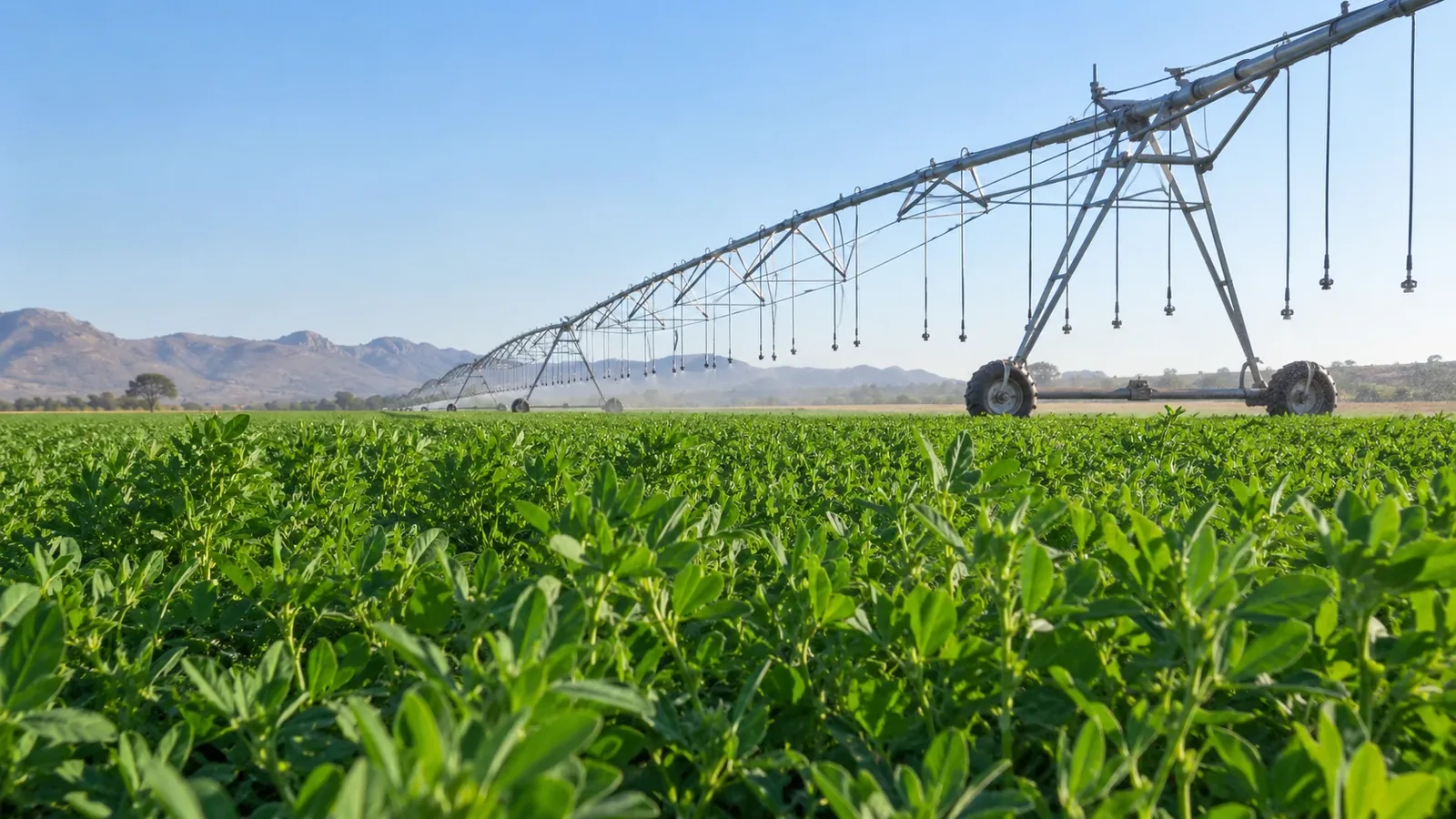
A pump quotation can look attractive while describing a duty different from the one the farm actually needs. The asset owner is buying water delivered under particular conditions, with an energy and maintenance obligation that continues after installation. Comparing candidates requires one agreed operating requirement and evidence that the proposed equipment can serve it throughout the intended season.
Write the delivery requirement
The engineering brief should identify the source, delivery destination, required flow and the conditions affecting the system. A qualified designer must determine the appropriate specification; investors should test whether every quotation uses the same basis. FAO's crop-water material helps establish the agricultural requirement, but it does not by itself select a pump. In a hypothetical expansion, adding a distant block can change the delivery task even if the crop remains unchanged. Reusing the earlier equipment assumption may therefore create a mismatch hidden within an otherwise familiar farm budget.
Compare the full operating envelope
The system may operate under more than one demand or source condition. Ask the designer how the proposed arrangement behaves across those conditions and what limits require a different operating approach. A single favourable test point should not represent the entire year. Compare expected energy use, control arrangements and maintenance on a common delivery basis. This reveals whether a lower acquisition price depends on assumptions that increase continuing expenditure or restrict the farm's flexibility when planting and irrigation schedules change during the season.
Measure delivered service
Commissioning should establish a documented baseline for water delivery and energy consumption using suitable instruments. Keep the test conditions and measurement boundaries visible. A supplier demonstration that the motor runs does not establish that the agreed water service has been achieved. Record defects, corrective actions and the responsible party before acceptance is closed. The farm can later compare actual performance with that baseline, rather than interpreting a higher electricity bill without knowing whether the change came from energy prices, more operating hours or altered equipment performance.
Maintain the decision record
Assign inspection, instrument care, maintenance and review of unexplained performance changes. Staff need a route for reporting reduced delivery or unusual consumption, with specialist assessment where required. The budget should include support and access to appropriate replacement parts. Water quality and soil management also remain relevant to the broader irrigation operation, as FAO guidance explains. For the owner, a durable purchasing decision leaves behind a clear relationship between the water needed, the equipment selected and the evidence used to confirm continuing service, rather than a catalogue capacity repeated in every forecast. A planned source change should trigger another engineering review rather than an assumption that the existing installation remains suitable without alteration.