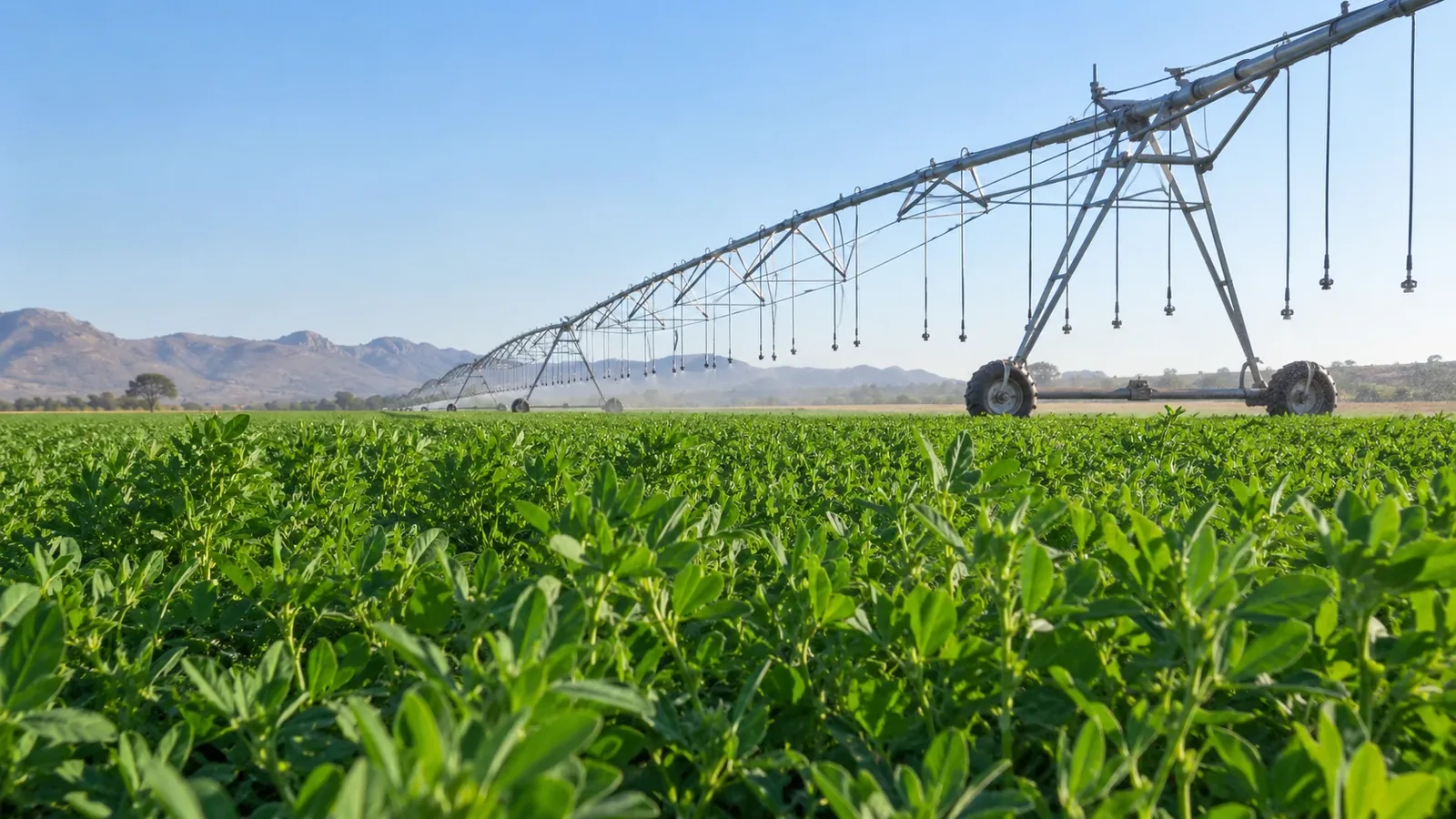
A farm can record water abstraction accurately while remaining unsure how that water is distributed across its fields. Uneven application can leave managers responding to symptoms with extra operating time. An irrigation audit should establish where the service differs from its intended design and whether correction is more valuable than extending the system to additional land.
Separate delivery from distribution
Pumped volume describes one boundary. Water reaching different parts of a field describes another. The audit should follow the actual system from source through delivery equipment and application, with qualified specialists choosing appropriate tests. FAO's irrigation guidance distinguishes crop requirements from the way irrigation is provided. In a hypothetical field, increasing run time to address one dry area could give other areas more water than intended. The first commercial decision is therefore whether the problem is overall supply, local distribution or the management instructions being used.
Test representative operating conditions
Measurements should reflect the configuration and conditions under which the farm normally works. Record equipment settings, maintenance status and the relevant operating context so repeat tests remain meaningful. A demonstration after exceptional preparation may establish what the system can do, without showing what it ordinarily delivers. Include areas where complaints recur and suitable comparison areas. The resulting evidence should identify exceptions by location rather than reducing the entire installation to one reassuring average that supervisors cannot use to assign repairs or change a particular task.
Prioritise corrections by consequence
The repair plan should distinguish immediate faults, management changes and longer-term redesign. Cost each action against the defined service improvement, including labour, parts, interruption and any further testing. A replacement purchase deserves comparison with a smaller correction if both address the same constraint. Equally, repeatedly repairing a system that cannot meet the approved operating requirement may defer an unavoidable redesign. The owner needs this distinction before approving expenditure based simply on equipment age or a supplier's general claim that new hardware is more efficient.
Make the audit repeatable
Keep a baseline showing the tested area, method, findings and completed work. Subsequent observations can then establish whether the correction remained effective as the season progressed. Staff should know which readings or visible changes require review, without being expected to substitute for specialist diagnosis. FAO's sustainable-soil guidance supports treating water management as part of continuing land stewardship. A repeatable audit helps the farm improve its existing productive service before it uses the same unverified distribution assumptions to justify a larger irrigation expansion. Where several units serve one field, retain their identities in the audit so recurring faults can be traced to the relevant equipment.