A drill hole can travel through a mineralised structure at a shallow angle and produce a long reported intersection. The commercial consequence is obvious: a reader may imagine more mineable thickness than the evidence supports. Choosing drilling orientation is therefore a geological decision with consequences for the credibility of the development model.
Put the hole into three dimensions
The technical file should bring together the surveyed collar, down-hole surveys and the interpreted position of the mineralised structure. A section showing only assay intervals leaves the relationship incomplete. Investigators need to understand whether the hole crosses the structure or follows it. JORC's reporting checklist addresses the relationship between mineralisation widths and reported intercept lengths. The distinction matters even when assays are reliable: a correctly analysed sample can still be presented within an inadequately explained geometry. Any uncertainty about true thickness should remain visible beside the intersection.
Commission a test of the interpretation
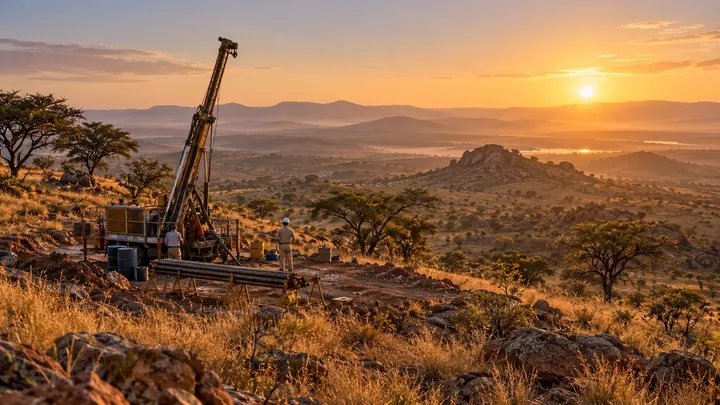
A hypothetical exploration team might investigate the same corridor from another direction. Agreement between the observations could strengthen the interpretation; disagreement could reveal structural complexity or an inaccurate assumption. The purpose is to discriminate among geological models. Before approving the programme, the owner should ask which orientations have been considered and what each could establish. Difficult terrain, access and drilling practicality also influence the choice, so the team should record why its selected approach is capable of answering the geological question within those constraints.
Carry uncertainty into the model
An early interpretation should distinguish observed intersections from inferred shapes between them. CIM guidance separates primary observations from interpreted data, a helpful discipline when a three-dimensional model begins to look authoritative. Alternative structural interpretations may deserve testing rather than immediate averaging into one preferred shape. A financial reviewer should avoid treating the longest intersection as a dependable mining width. Engineering assumptions need to reference the actual geological interpretation and its confidence, including the consequences if later drilling establishes a different shape or continuity.
Report the decision that follows
The exploration manager can describe progress through the alternatives eliminated and the questions remaining. More metres may be necessary, but length alone does not measure the information obtained. Investors should seek clear cross-sections, survey controls and an explanation of how the next holes affect the model. Owners should preserve the original interpretation so changes can be understood later. This is general exploration analysis; it establishes no new geological results for ALFA's project profiles. A persuasive drilling announcement allows the reader to see how geometry was tested before a development scale is discussed with potential operating and financing partners.