A machine's rated capacity describes a task under particular conditions. A farming business needs that task completed across its fields within an acceptable window. The difference includes travel, loading, maintenance, operators and the next piece of equipment in the chain. For agricultural developments moving from feasibility to procurement, buying the right schedule matters as much as buying the right machine.
Define the work in practical units
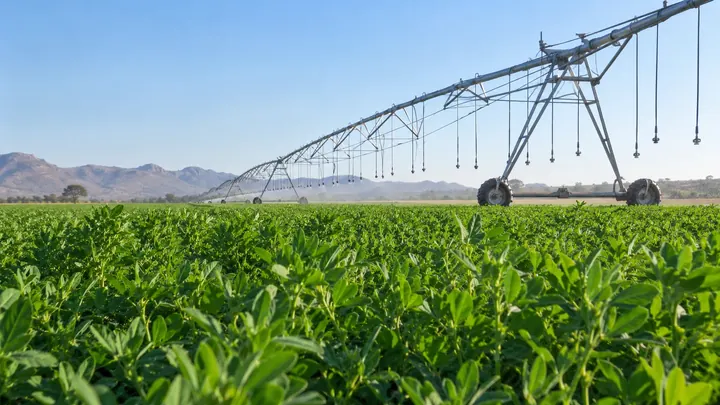
Start with the crop operation, area, expected material and the time available. A harvest plan may need several operations completed in sequence, so the fastest individual machine cannot establish the speed of the whole system. The reviewer should ask how daily work is measured and where delays accumulate. Field access and distance between blocks belong in the calculation. The Mwenezi lucerne programme combines harvesting, handling and export logistics; its machinery case should therefore be judged against the connected programme rather than isolated catalogue ratings.
Find the limiting link
A harvesting machine can wait for trailers, trailers can wait for unloading, and storage can fill before dispatch resumes. A simple work-flow study should show the queue at each transfer. It should also identify whether the constraint changes during the season. The solution may be extra handling capacity or a revised shift rather than another primary machine. Procurement can then focus on the part of the chain that increases completed useful work. This avoids a capital plan in which several capable units remain idle around one unresolved bottleneck.
Choose ownership with downtime in mind
Buying, leasing and contracting should be compared using the same required service: completed work during the agreed window. The comparison needs operator availability, service support, spare parts and the consequences of a failure. A contractor's lower headline fee has limited value if its fleet is committed elsewhere during the same harvest period. An owned machine has its own staffing and maintenance obligations. The decision file should identify the contingency when the primary arrangement fails, including how quickly a replacement can actually reach the site.
The comparison should state who bears weather and scheduling risk. A fixed payment for machine availability differs from payment for completed work. Both arrangements may be useful, but management needs to know which one it is buying and whether the supplier can support the required timetable when several customers request service together.
Use the first season as operating evidence
A development can record task start and finish times, interruptions, fuel use and the material handled by each unit. Those records should inform the next purchase and the following crop plan. Water planning, described by FAO in seasonal terms, is one reason the agricultural calendar may move; machinery commitments should be flexible enough to reflect approved changes. For ALFA's projects, no fleet performance is asserted here. The recommendation is to make future mechanisation decisions reviewable through measured service delivery, so that a second purchase solves a demonstrated constraint.