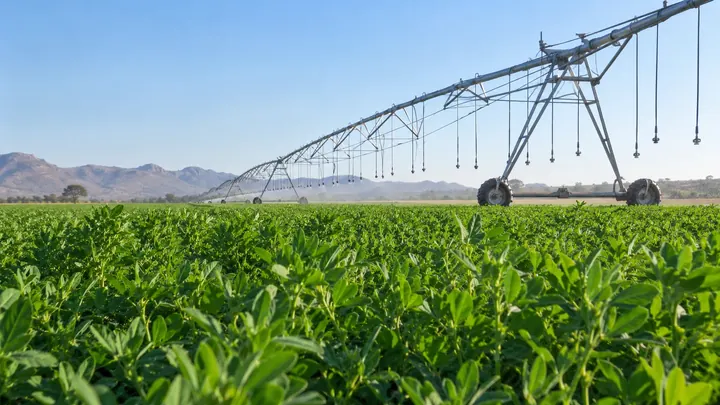
A single salinity result can attract an immediate recommendation for treatment. The stronger management decision begins by asking what was measured, where it sits within the field and how water is moving through the system. For an irrigated farm, monitoring should help explain a developing condition before the owner commits to a remedy whose cost and effect remain uncertain.
Keep measurements on a common basis
Soil and irrigation-water measurements answer related but different questions. Preserve methods, units, locations and dates so qualified advisers can interpret them correctly. FAO's water-quality guidance explains that salt accumulation depends on water quality, irrigation management and drainage. A hypothetical farm could receive a concerning result after changing its sample location, even where the original field area has not changed. An owner needs that distinction before accepting a claim that a treatment succeeded or that the entire holding is becoming unsuitable for its crop.
Examine the operating history
Place results beside water sources, irrigation events, drainage observations and crop behaviour. Ask whether the pattern is local, seasonal or associated with a particular management change. The investigation should consider plausible causes before recommending expenditure. More monitoring may be appropriate if the initial evidence cannot distinguish them. This is especially relevant when comparing expansion areas: a favourable result from one block cannot establish the future condition of another block with different soil, drainage or water-delivery arrangements, even if both appear within one farm boundary.
Assess responses as managed trials
A local specialist should determine appropriate measures and the information needed to assess them. Investors should avoid turning general guidance into an application prescription. For the commercial review, define the targeted area, expected operating change, cost and observation period. Compare alternatives using the same measurement basis and include their continuing requirements. An intervention that depends on additional water, drainage capacity or repeated material purchases should show those dependencies openly; its initial price does not describe the full commitment the farm would be making.
Build monitoring into expansion decisions
Agree how findings affect the next planting or development stage. Some areas may justify a limited trial while others need further investigation or a different use. Record who interprets the evidence and authorises the response, particularly where operators change. FAO's salty-soil guidance reinforces the relationship between irrigation and drainage management. A clear trend record gives the owner an opportunity to respond before assumptions become embedded in a larger business plan. It also prevents isolated laboratory results from becoming unsupported claims about permanent land improvement or deterioration. A change of irrigation source deserves a documented review, because earlier monitoring may no longer represent the water subsequently reaching the field.