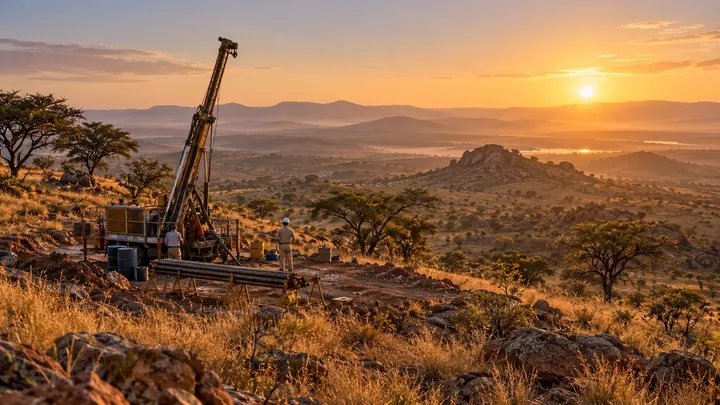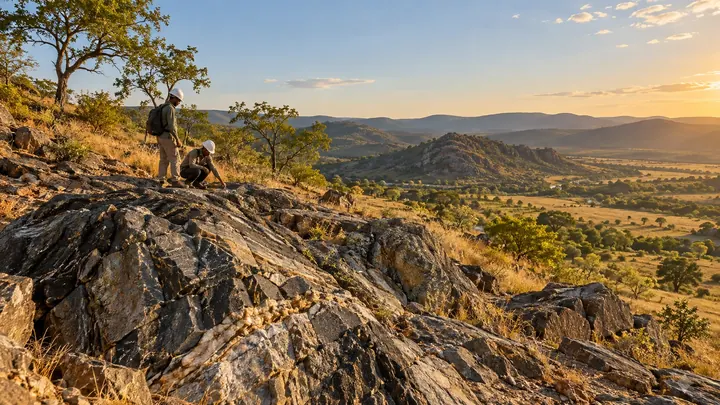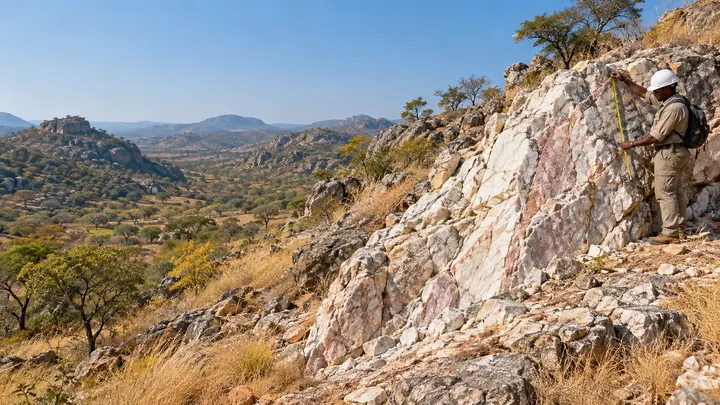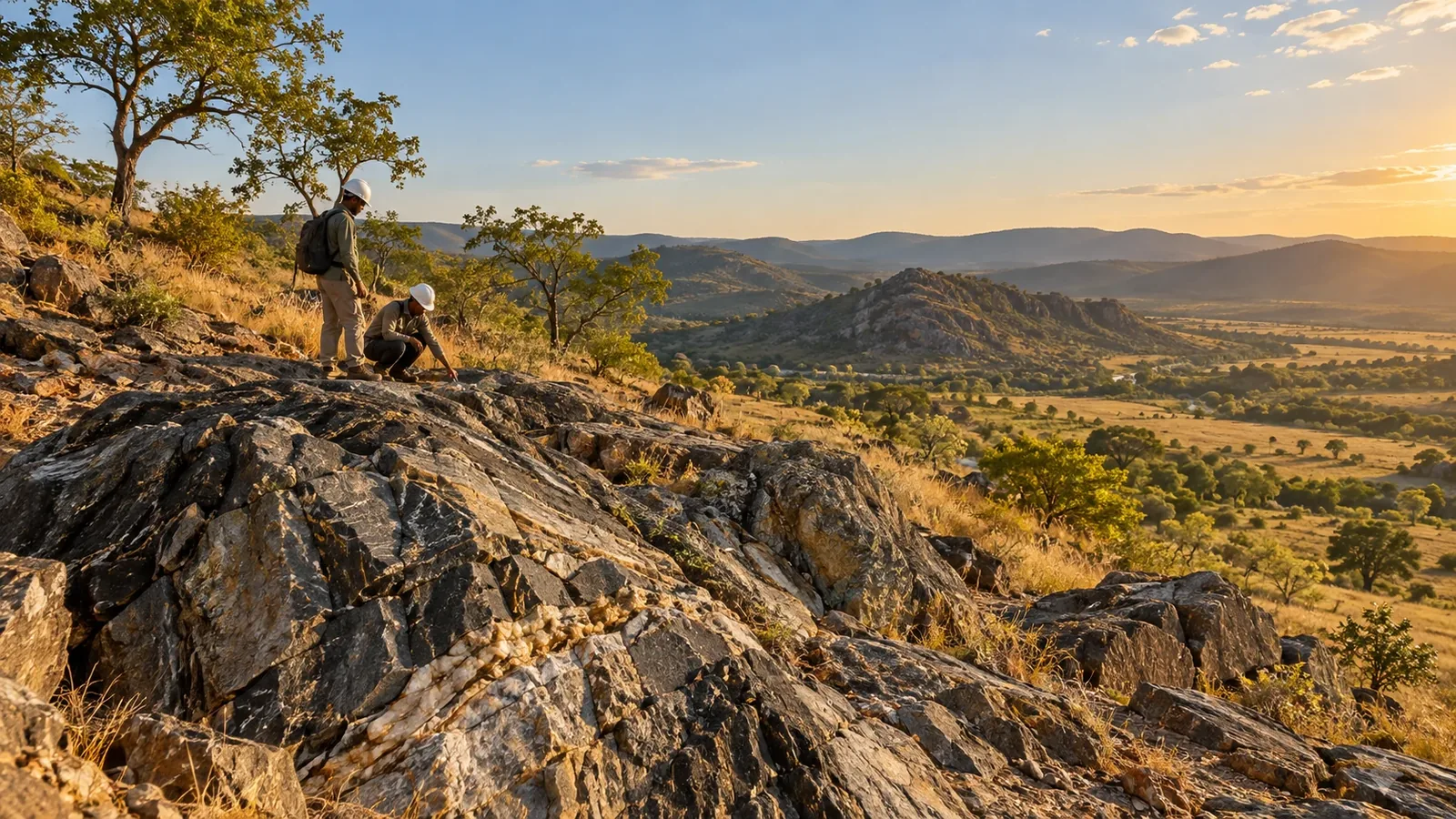
A geophysical interpretation becomes useful when it improves a geological decision. For Shangani Gold in Zimbabwe, ALFA’s whitepaper describes mapping, drone terrain data and geophysics used to identify corridors for confirmatory drilling. An investor reviewing the next work programme should ask how those corridors become a specific test, rather than a premature production story.
Read the survey at its stated scale
The source describes an exploration area of 1,911 hectares and an August 2025 technical report covering approximately 29 kilometres of profiling across 22 resistivity and induced-polarization lines. These figures describe survey coverage. They do not directly quantify gold content, recoverable inventory or annual output.
A technical reviewer should be able to match the interpretation to survey locations, acquisition parameters and geological mapping. Terrain data may improve the spatial picture, while surface observations help test whether the interpreted structures make sense in the field.
State competing explanations before drilling
A response measured by an instrument needs geological interpretation. The next programme should say why a particular corridor is prospective, which alternative explanations remain and how a hole would distinguish between them. This is an editorial framework for commissioning the work, rather than an independent interpretation of Shangani’s geology.
For the owner, a useful drilling brief includes target rationale, intended orientation, expected observations and contingency decisions. If the first holes contradict the model, the team should be able to change its plan without defending a predetermined development scenario.
Connect the new core to a reliable database
Confirmatory drilling needs core logging, sample recovery records, survey control, suitable assays and a quality-control programme. The reporting task is broader than announcing intersections. Readers need enough context to understand what was tested, what remains open and whether the observations support continuity.
JORC’s Table 1 offers a recognised checklist for the disclosure of sampling, drilling and data quality. It is cited here as a reading aid. ALFA’s project summary does not establish a resource reported under that code, and a checklist reference does not supply the missing technical results.
Reserve production decisions for a later evidence file
The Shangani summary calls for representative assays, metallurgical recovery and a reconciled geological model before development scenarios support reliable mine design or production claims. An exploration budget should therefore be judged by the information it can produce, with clear responsibilities for verification and interpretation.
An investor’s immediate choice is whether the proposed programme is capable of resolving a material uncertainty at an appropriate cost. The owner’s choice is how to protect the integrity of the investigation. Both improve when a survey map is treated as a guide to the next experiment, and the financial model is allowed to wait for the evidence it requires.