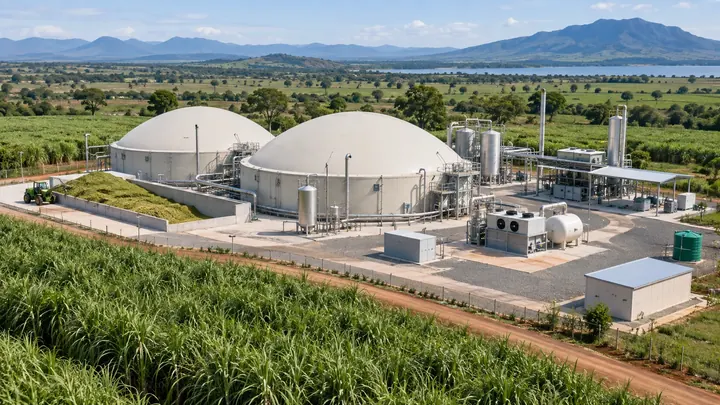
The Tana River programme connects Napier cultivation in Kenya with compressed-biogas production. ALFA's whitepaper describes a 5,000-hectare feedstock programme and a chain running from cultivation through digestion, gas upgrading, compression and distribution. It establishes no operating ALFA plant, final gas-production capacity or commissioning date. The next technical question is how reliably the agricultural system could supply usable material at a cost the fuel business can support.
Keep wet weight and fuel potential separate
The IEA distinguishes total biogas yield from methane yield, the portion relevant to fuel use. For Tana River, the editorial diligence implication is that harvested tonnes alone cannot size the commercial gas case. Representative local material needs testing, with the measurement basis made explicit. Agronomic output, moisture and conversion results should be connected in one mass balance. A favourable result from one sample would remain a trial result until the project demonstrates that the supply programme can deliver comparable material consistently.
Build the feedstock calendar
A dependable daily intake requires more than an annual harvest forecast. The model should identify planting cohorts, harvest cycles, machinery, transport and storage. Each stage needs an expected loss and a cost based on conditions that can be delivered locally. FAO's crop-water guidance also reinforces the need for a seasonal water budget; proximity to a water source does not settle crop supply. The proposed agricultural area should therefore be assessed through a development schedule that shows how usable feedstock becomes available during ramp-up.
Design the conversion chain together
Digestion, cleaning, upgrading and compression create connected requirements. The plant's intended customer specification should inform the gas treatment design and the measurement of saleable output. Internal energy use, interruptions and maintenance also belong in the operating case. A project can avoid misleading comparisons by distinguishing raw biogas from upgraded product delivered under an agreed specification. Supplier quotations should use the same feedstock assumptions and output boundary, so differences in price do not conceal different promises about the service being purchased.
The plant boundary should also identify where output is measured and which party maintains the instruments. Without an agreed basis, a supplier performance figure and a customer delivery figure may describe different quantities. Establishing the boundary during feasibility gives later engineering tests and commercial reporting a consistent point of reference.
Identify the decision before committing capital
The useful next package would combine local crop trials, conversion testing, a seasonal supply model and a preliminary route to customers. It should state the uncertainties that engineering must still resolve and define what evidence supports the first plant stage. Digestate and carbon-related opportunities require separate quality, eligibility and verification work; they should not fill an unexplained gap in the core fuel case. Tana River’s agricultural energy programme brings feedstock development and gas production into one operating design. A disciplined feasibility programme would make its potential more reviewable while keeping development ambition distinct from commissioned gas production.